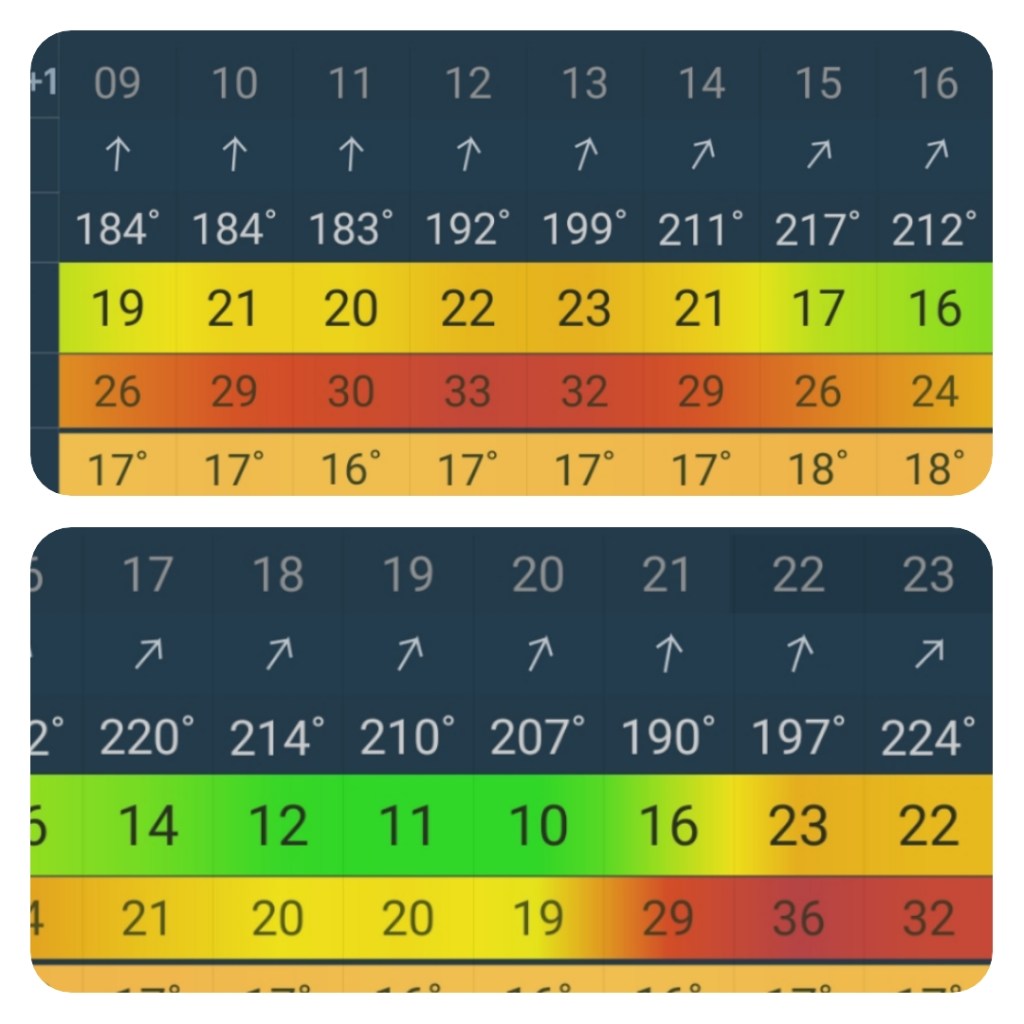
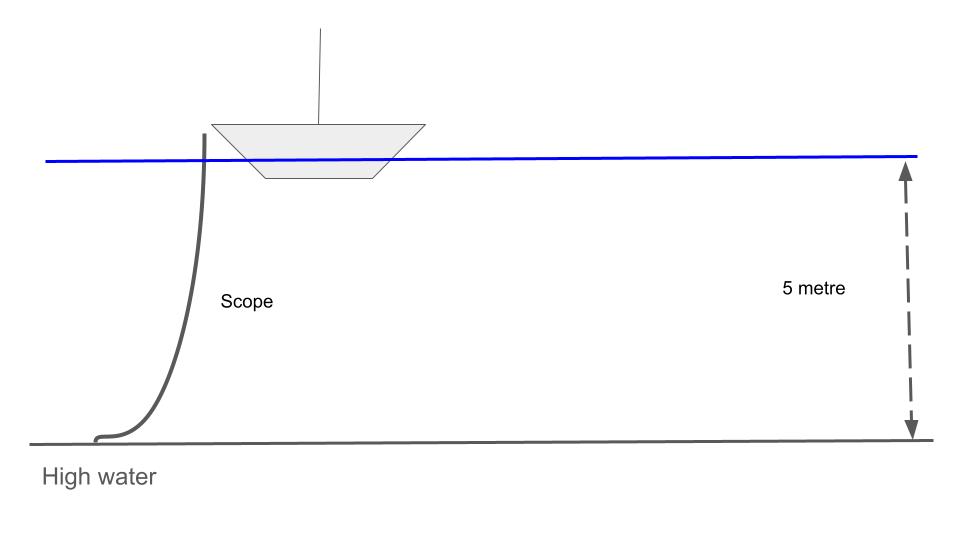
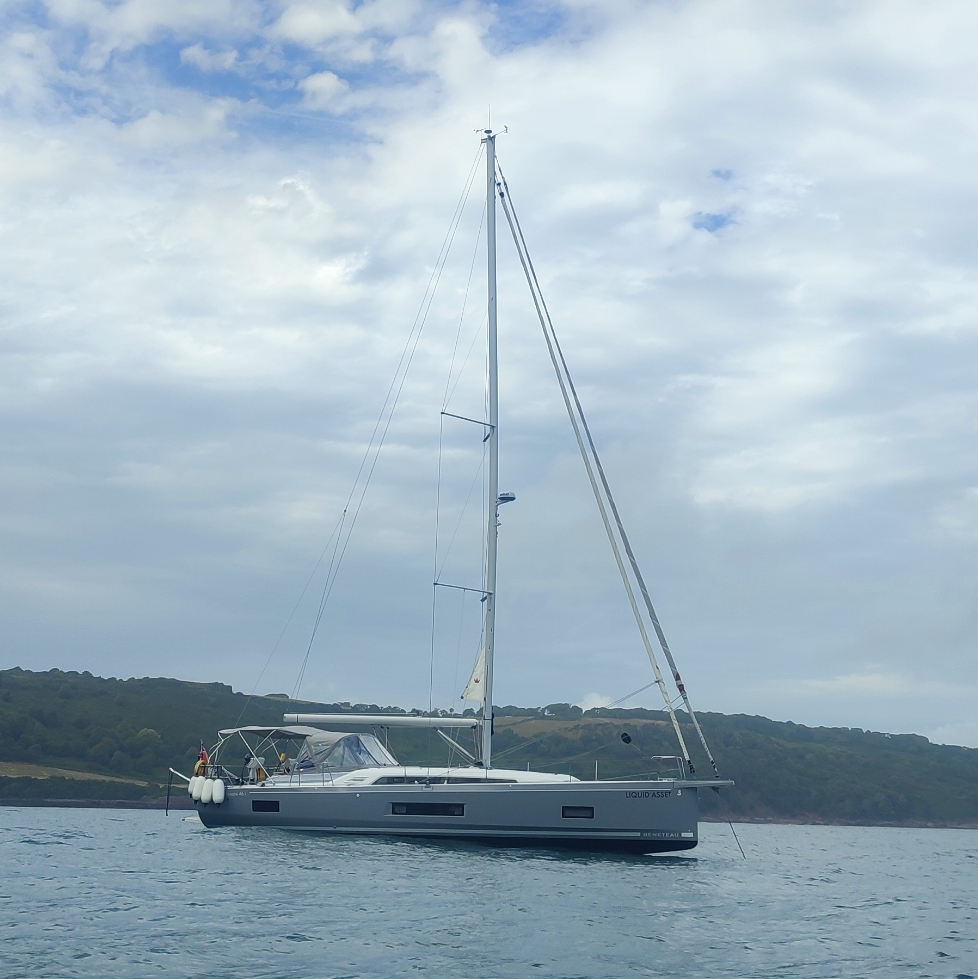
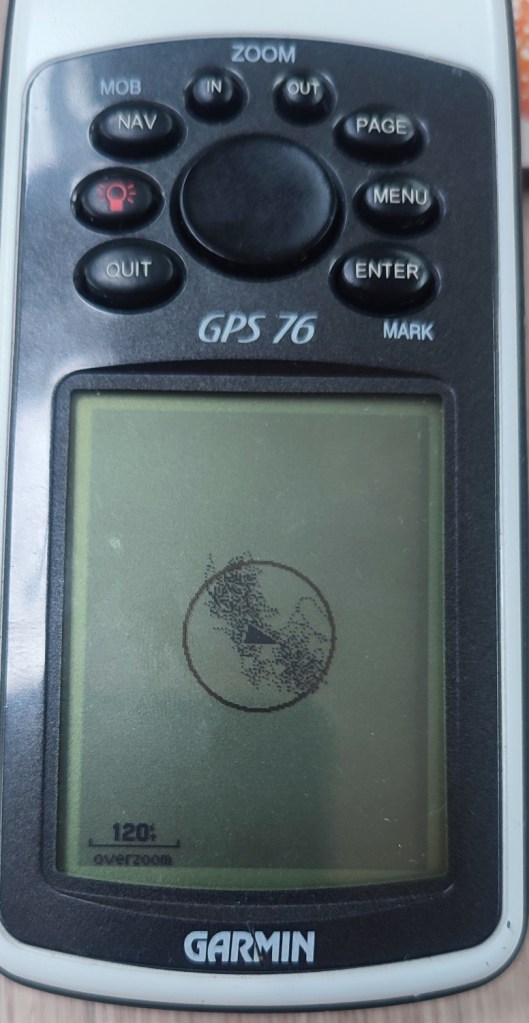
Our only focus today was to prepare for two periods of high winds: 13:00 F7 near gale and 22:00 F8 gale. We were anchored in the shelter of southerlies at a low water depth of 4 metres, and our anchor was set into the seabed with 30 metres of chain. Tidal range: 3 metres. An anchor alarm was set to sound if we drifted. We were ready for the first blast.
Many things have to be considered when anchoring. The range of the tide from low water to high water, the depth, and the time of anchoring during this cycle The type of seabed varies from sand, mud and even rock. The length of the chain to account for different depths over 12 hours and the proximity of neighbouring vessels. A three dimensional puzzle over time.

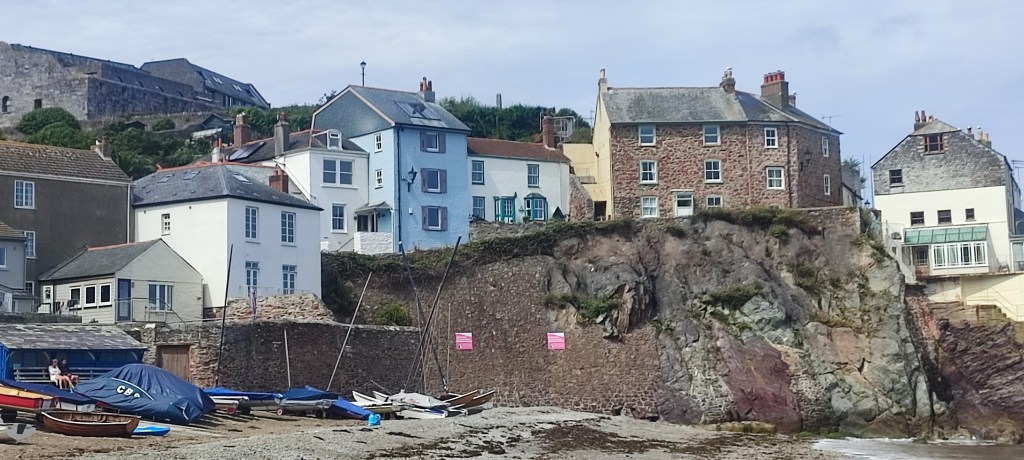
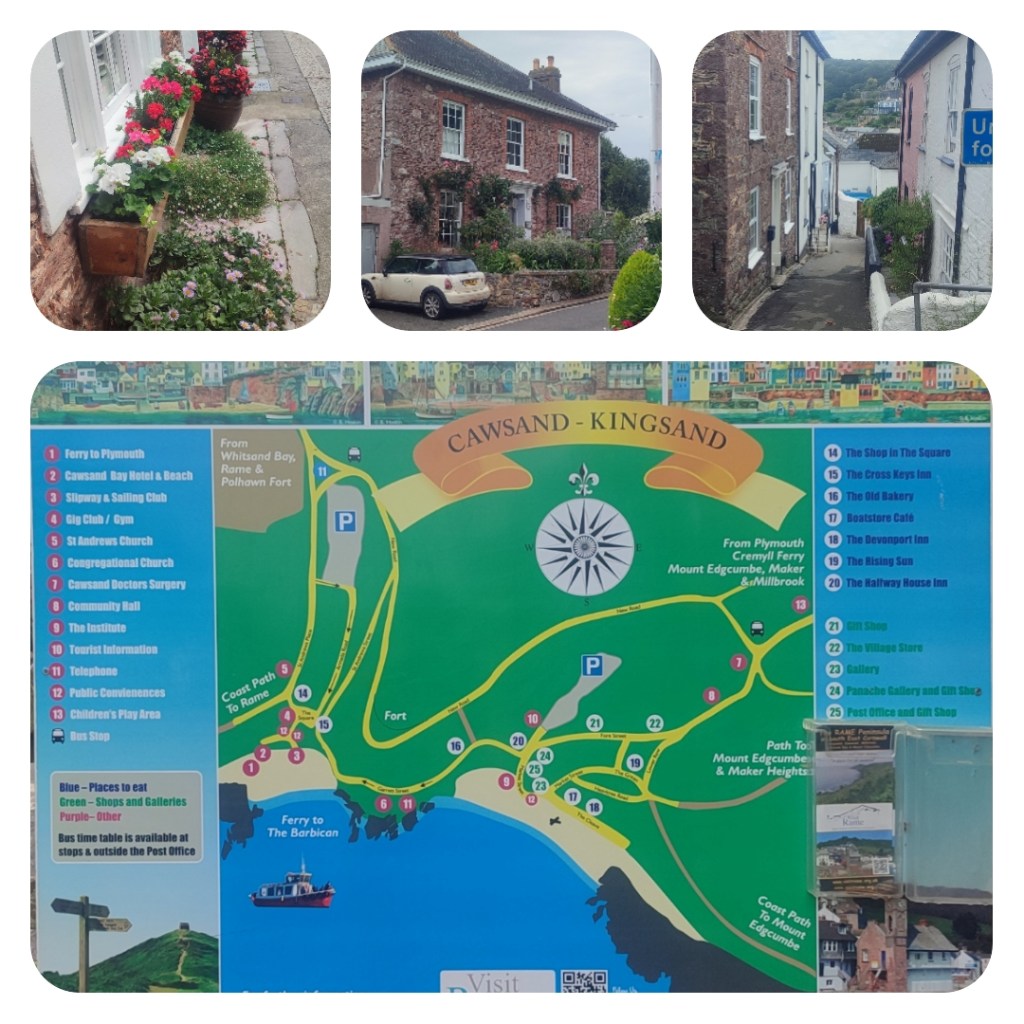
14:00 Now that the first blast was over, the dinghy was lowered down and a crew member rowed ashore about 0.3 NM. The winds had abated and there were blue skies. Cawsand and Kingsand have narrow lanes to explore and fine views out to sea.

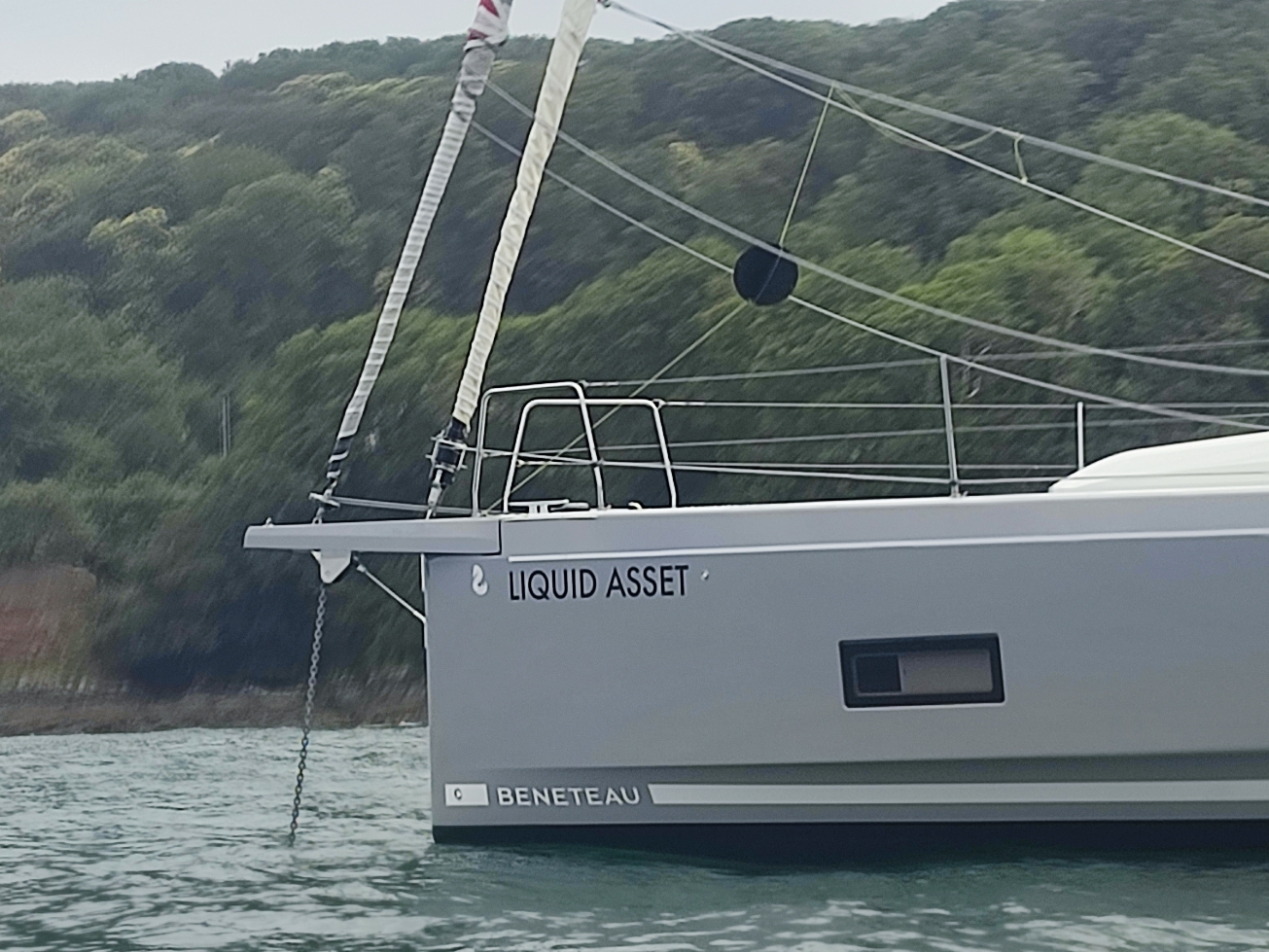
When at anchor, a vessel must raise an anchor ball above the foredeck to give a visible signal they are attached to the ground. And at night a single white light is shone from the highest point at the masthead.
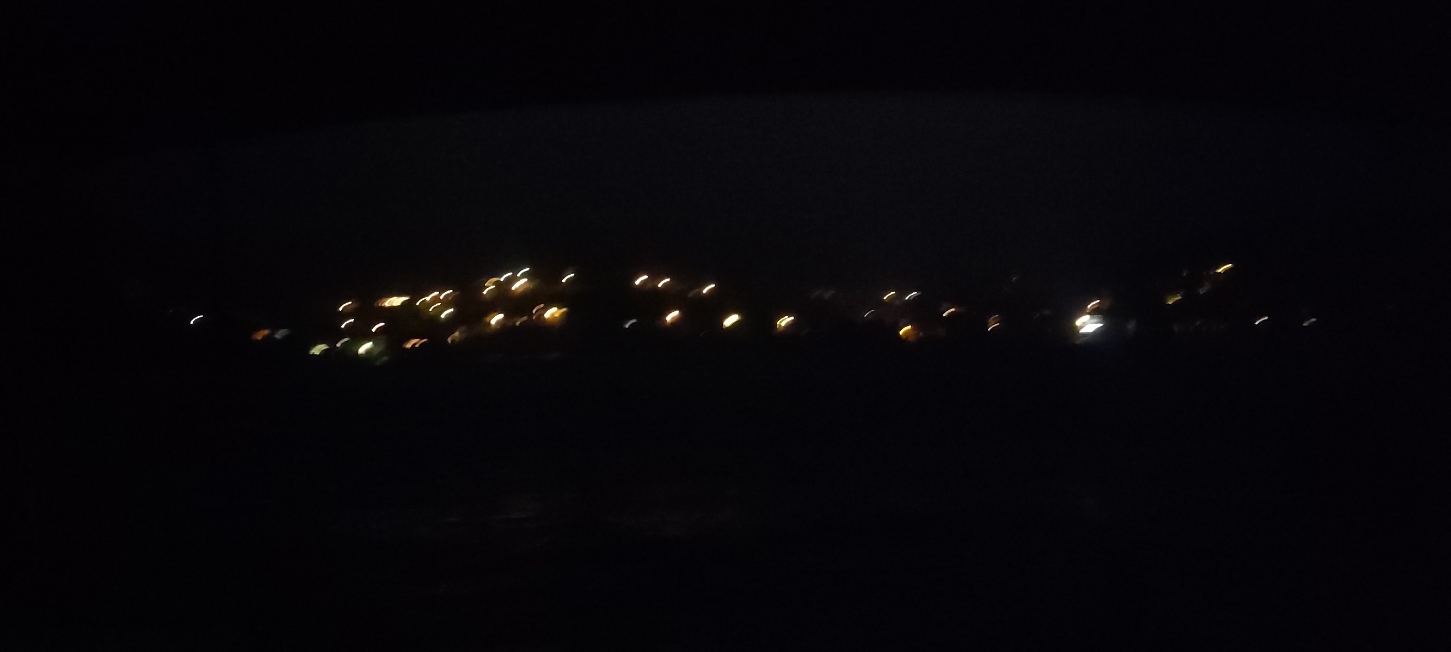
20:00 The seas beyond the headland were displaying signs of heavy weather. Heavy rain and darkness fell upon the waters. Only a few yachts were anchored, so we laid out more chain to 40 metres. The second blast was imminent.
 Experience Sailing