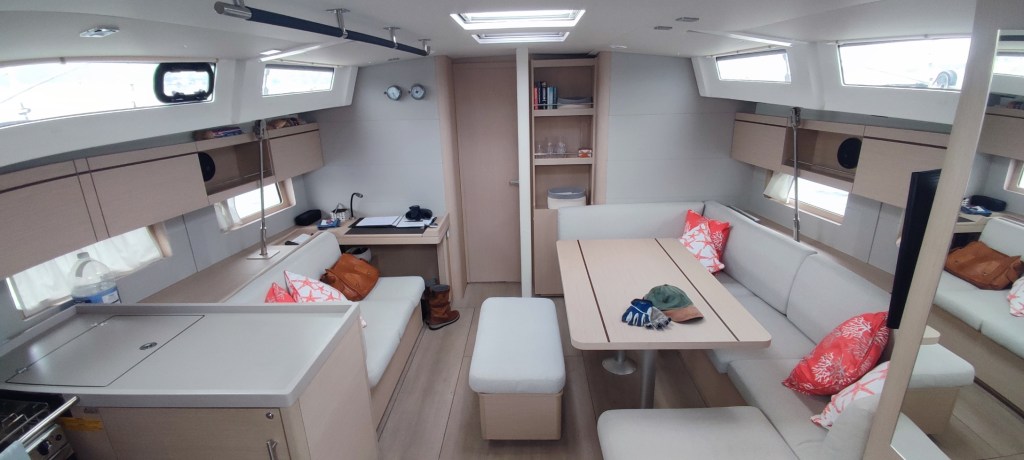
“What’s it like living on board a sailing yacht?” is a question often asked.
Firstly everything has to be shipshape because the vessel is constantly moving whilst at sea. Waves rock the hull and the surfaces are never level. So any item will move off unless tied down or locked in a cupboard. It’s just a fact and you will soon realise the consequences when you watch your dinner fly off the table!
And if above deck, the wind will blow everything off. Yes, caps are tightly fitted to your head and held in place with clips.
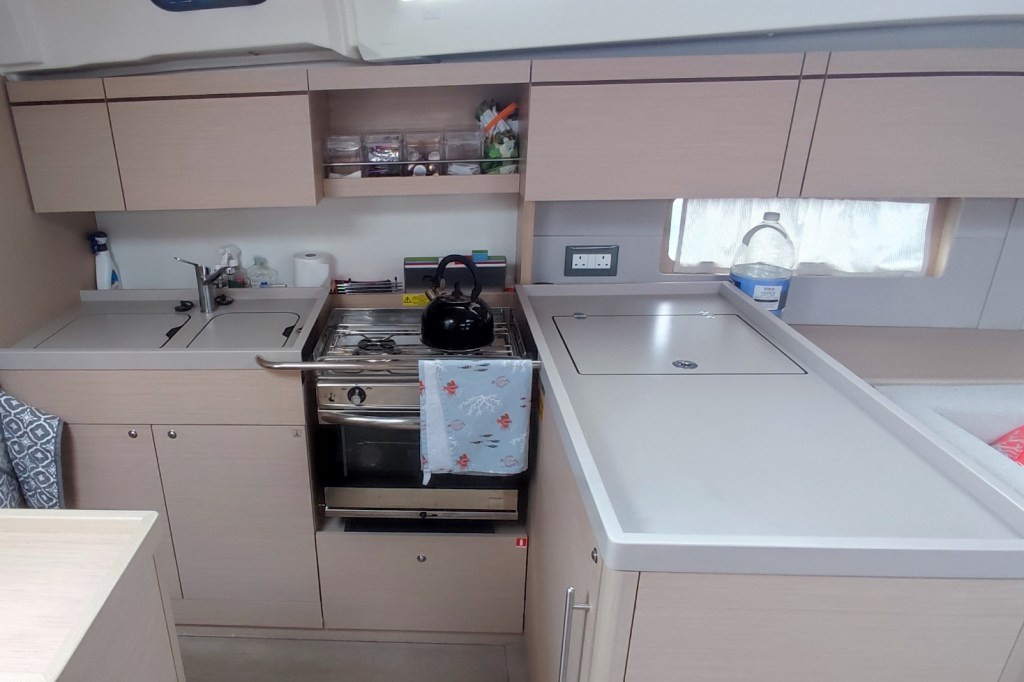
So everything is designed to help manage these moving events. The cooker swings on gimbals (hinges), surfaces have fiddles (raised edges) and cupboards have locks. There are even handholds in the ceiling to grab on to. Life onboard is quite different.
Today’s planning was based on the position of the moon. Apart from the wind direction, nothing else mattered. It rises at 17:11, sets at 01:52 and is in the phase of waxing gibbous 80%. These facts translate to tidal flows and tidal heights.
The moon lifts our seas up and moves this bulge of water across the surface of the globe. The water is squeezed as it travels along land masses and between islands. Strong currents form that can sweep your vessel forward quickly or slow you down greatly.
Our departure was timed 09:00 to catch the south tidal flows.
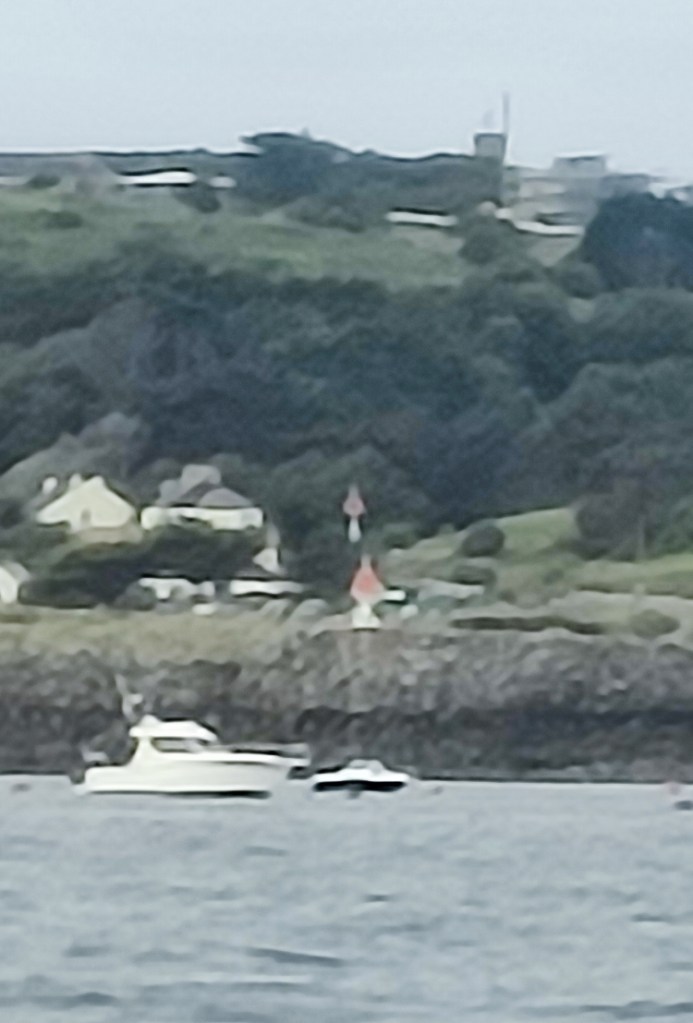
Navigation begins with knowing where you are, where your finish is, and everything in between. We raised the anchor and motored out into the open seas by checking the leading line (two triangles on the hillside kept on line with each other). A second leading line marked the end of the harbour reef and we turned about to enter The Swinge.

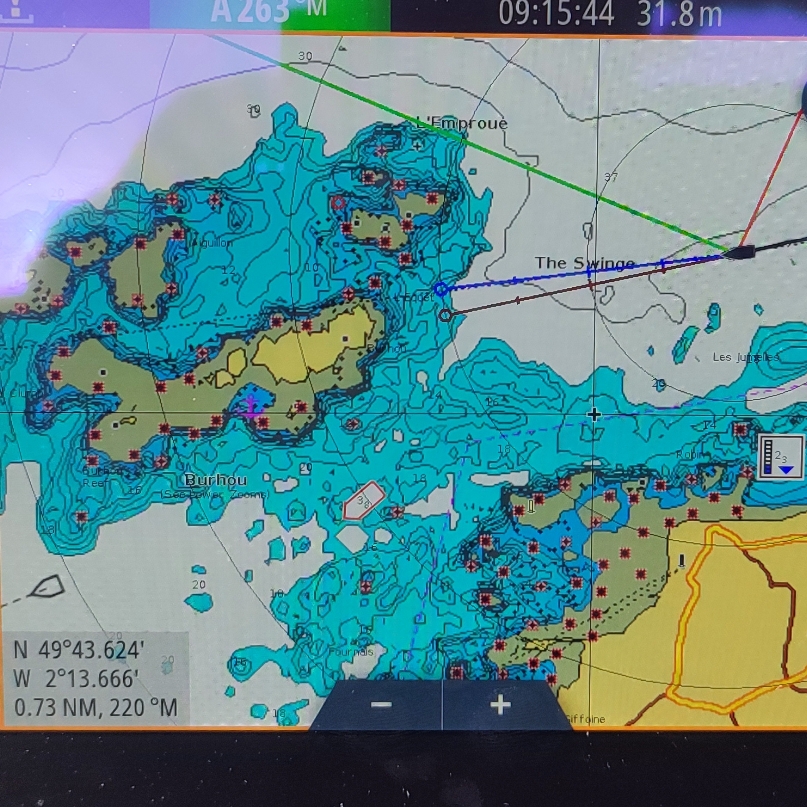
There are two masses of rocks near Alderney – Casquets and Burhou. And there is a navigable channel between Alderney and these rocks called The Swinge. We set our course to motor through the channel leaving North Rock to starboard (0.24nm) and South Rock to port (0.25nm). The tide was running fast with a boat speed of 4kts and a speed over ground SOG of 8kts. Then we met a stretch of turbulence as the wind whipped up through the channel. The yacht cut through the breaking waves and soon we were ‘flying’ along in open waters.
List of rock names (click on link)
The sails were raised under a cloudless sky and we sailed for two hours in perfect conditions.
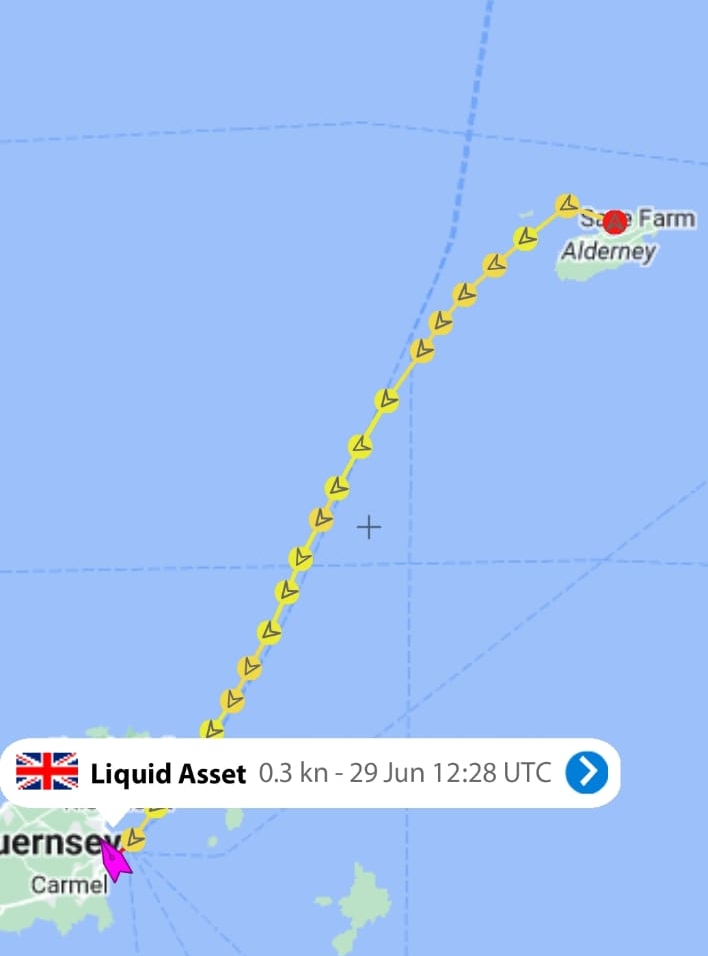
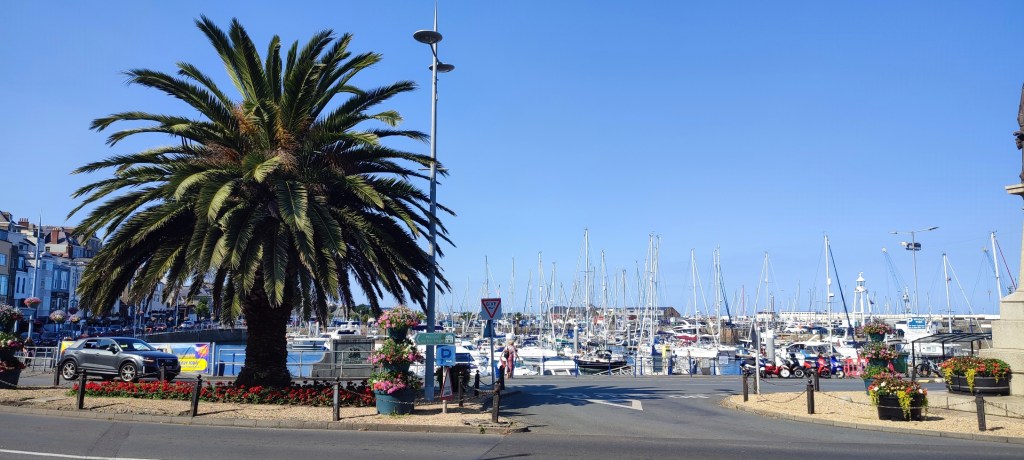
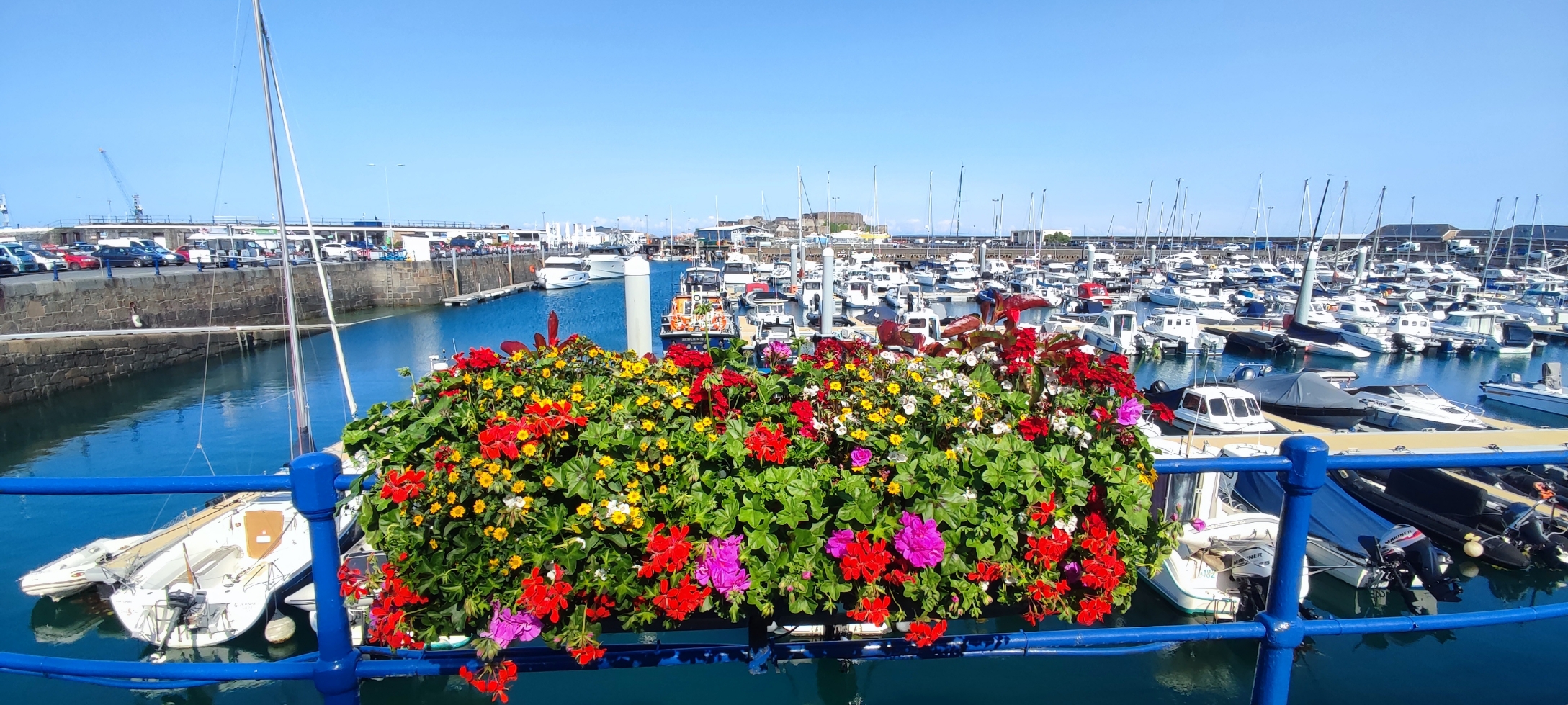
St Peter Port is the main town of Guernsey and the fuel pump is positioned just inside the harbour entrance. We motored to the pontoon and the strong wind blew the boat gently sideways until we rested and tied up.
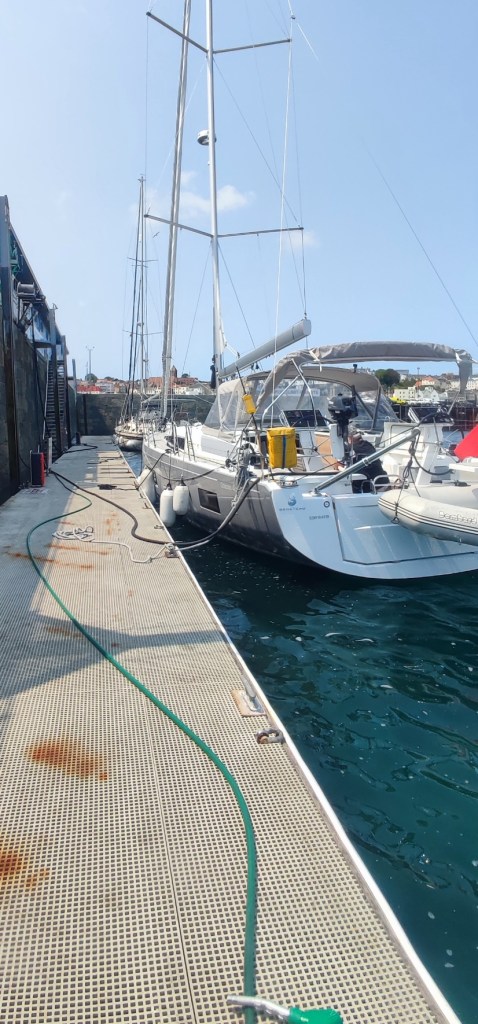
The wind continued to press the boat against the pontoon and getting off would be tricky. One option was to spring off with a stern line attached – reversing on a fixed line allows the bow to come off the pontoon. Applying the bow thruster helped. Phew, when we were safely out and back in the harbour entrance.

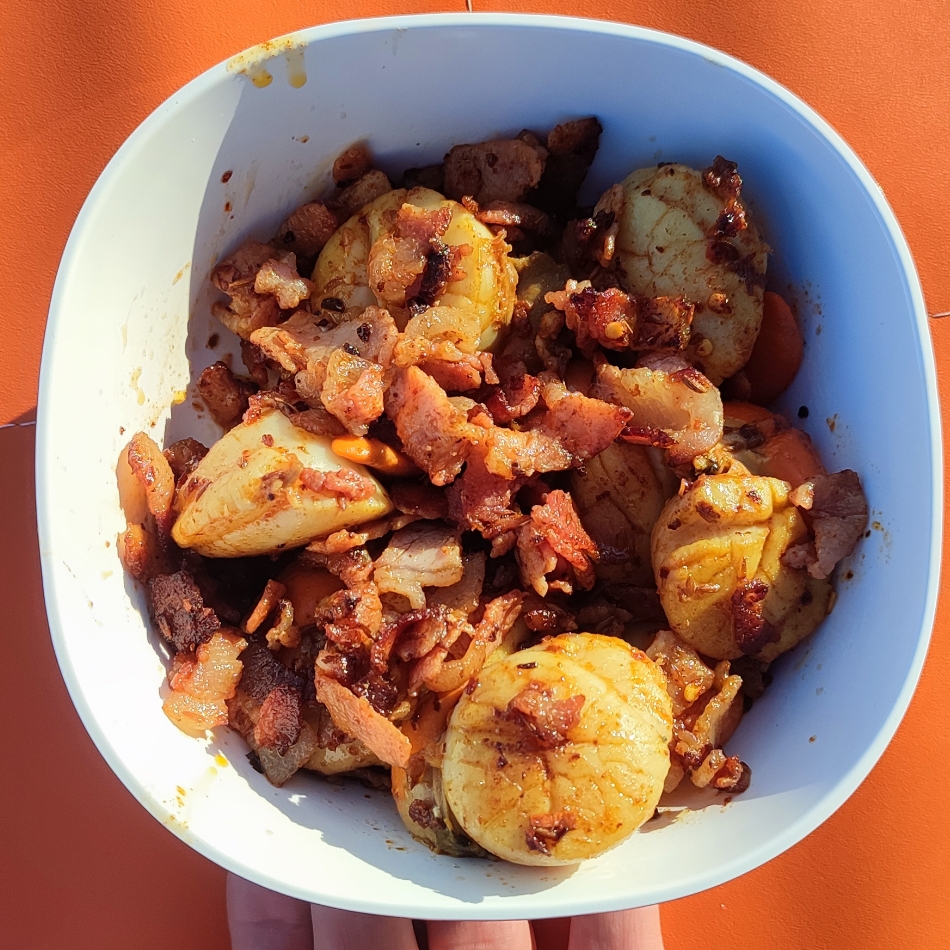
We anchored behind Castle Cornet in Havelet Bay. A stroll through Town, refreshments, fresh seafood purchase and then back onboard for an evening meal. Yachts were racing in the distance.
 Experience Sailing