The halyards frapping in the wind as it blows through the shrouds. Raindrops dripping off the mast crosstrees and falling onto the decks. Morning has broken.
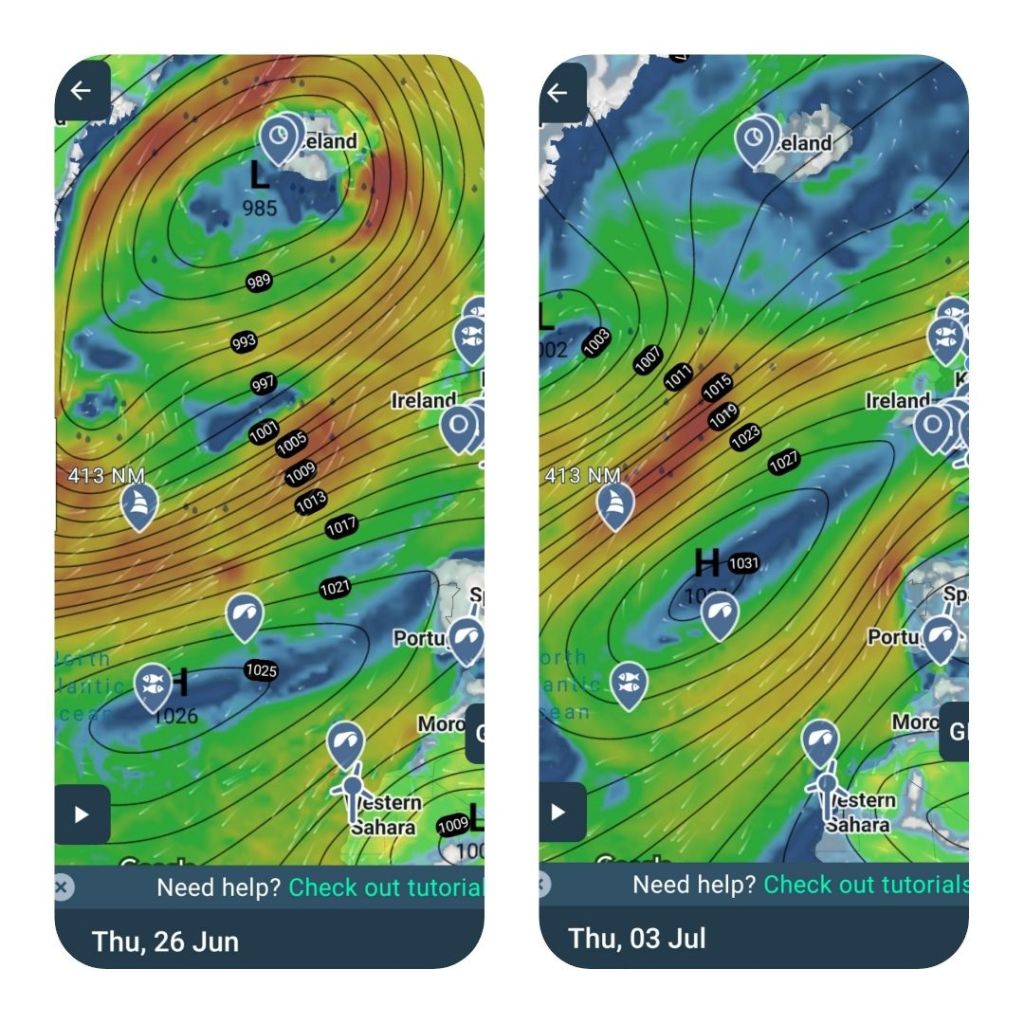
The forecast for wind speed and direction is set, and today the centre of the low sits over Iceland. The wind direction is westerly, and its speed is Beaufort force 4. Next week, the Azores high-pressure system moves towards the UK and the wind direction changes.
So today, we headed southward because otherwise we would be stuck in Dartmouth for a few days.
“One line placed on the canvas committed…” us to sailing beyond the horizon on a heading of 140°.
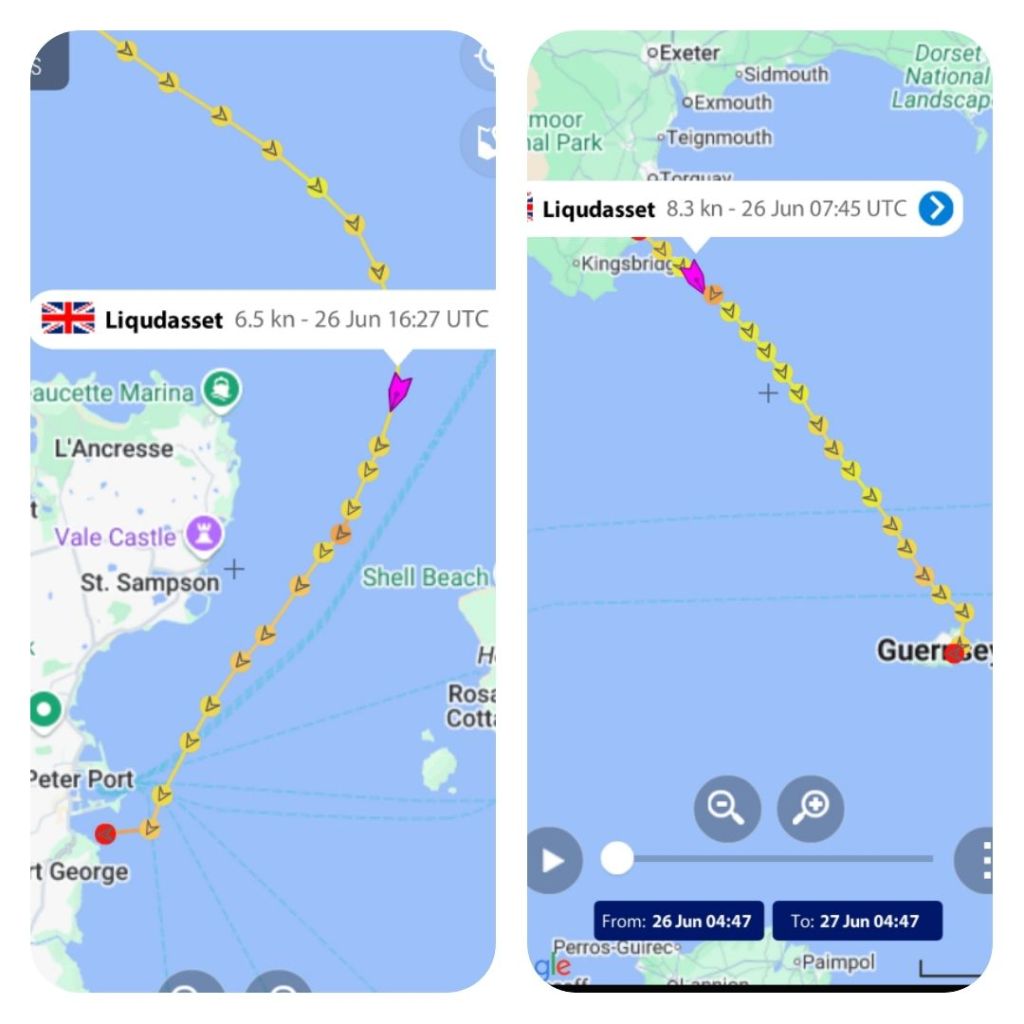
We must depart by 07:35 before the tide turns to ebb. And our arrival demands a time before the tidal gate closes at 18:00. We have estimated a speed of 6kts to travel the 65NM.
Time = Distance / Speed = 65NM / 6kts = 10.83 hrs = 18:25. A tight window.
The plan is to publish the blog daily during the trip, however we may have no signal when out at sea or perhaps too busy sailing!
Editor
07:15 Yacht Liquid Asset slips her lines and makes way through the harbour shrouded in mist. A period of transition when we leave a life on solid land and adjust to living on the sea and the constant movement it offers.
Outside the safe haven, our attention turns to raising the sails; first the main and then the headsail. They are adjusted to the wind angle and reduced in size so as not to be overpowered. Our speed was 8.2kts, a great start to reach our destination on time. However the seas were choppy and confused, and adjusting won’t be easy.
We powered across the English Channel, avoiding the huge ships which plied constantly in and out of the busiest shipping lane in the world. (500 vessels per day).

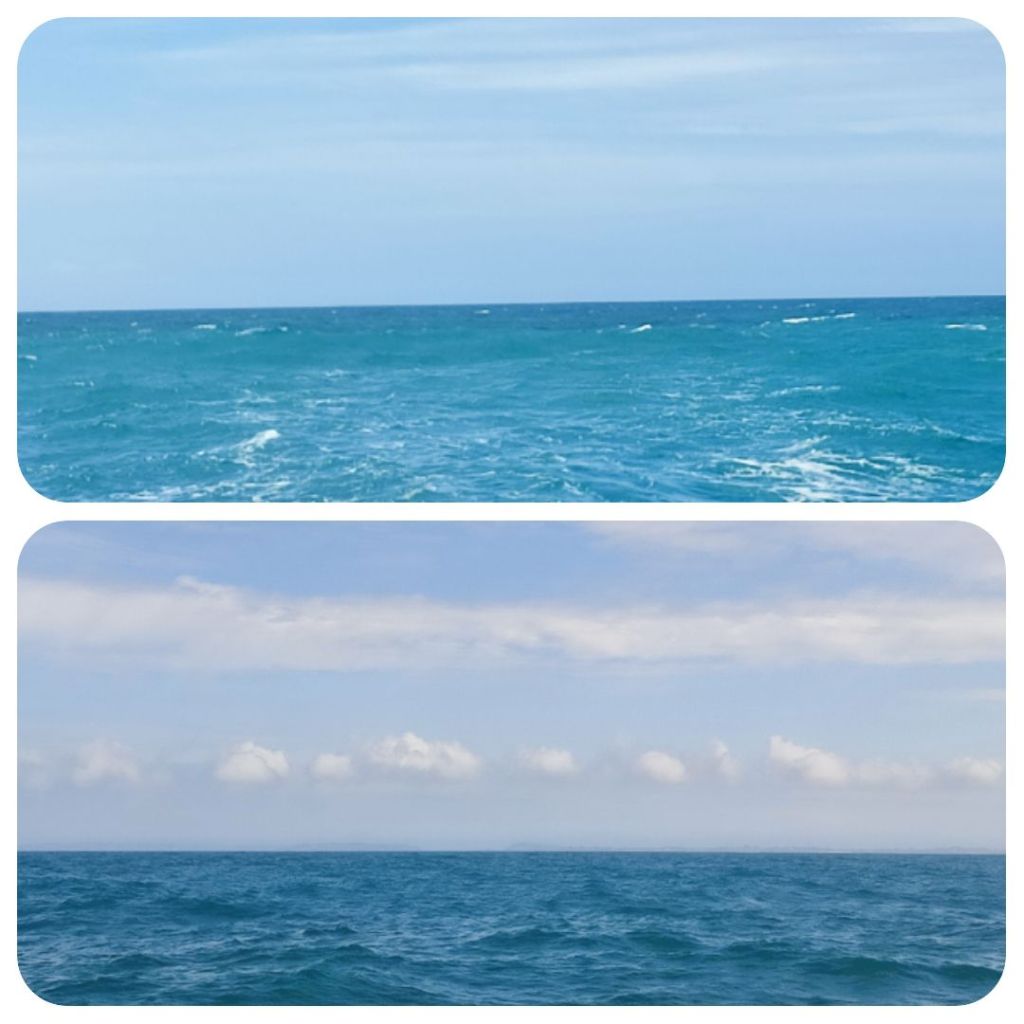
When sailing for 10 hours, small and significant changes are noticeable. For example, the colour of the sea changes from a dull grey to a vibrant turquoise blue when the sun breaks from behind the clouds. And small puffy white clouds on the horizon gather above the land and confirm our destination is just over there.
17:35 After adjusting our course for wind shifts and the tides, we arrived early before the tidal gate closed. This was crucial because fighting against the strong channel tides can drop your speed to one or two knots. The final leg ends with sailing down the Little Roussel channel, avoiding the Trois Grune rocks and leaving the Bréhon Tower to port.
Little Roussel link opens new page
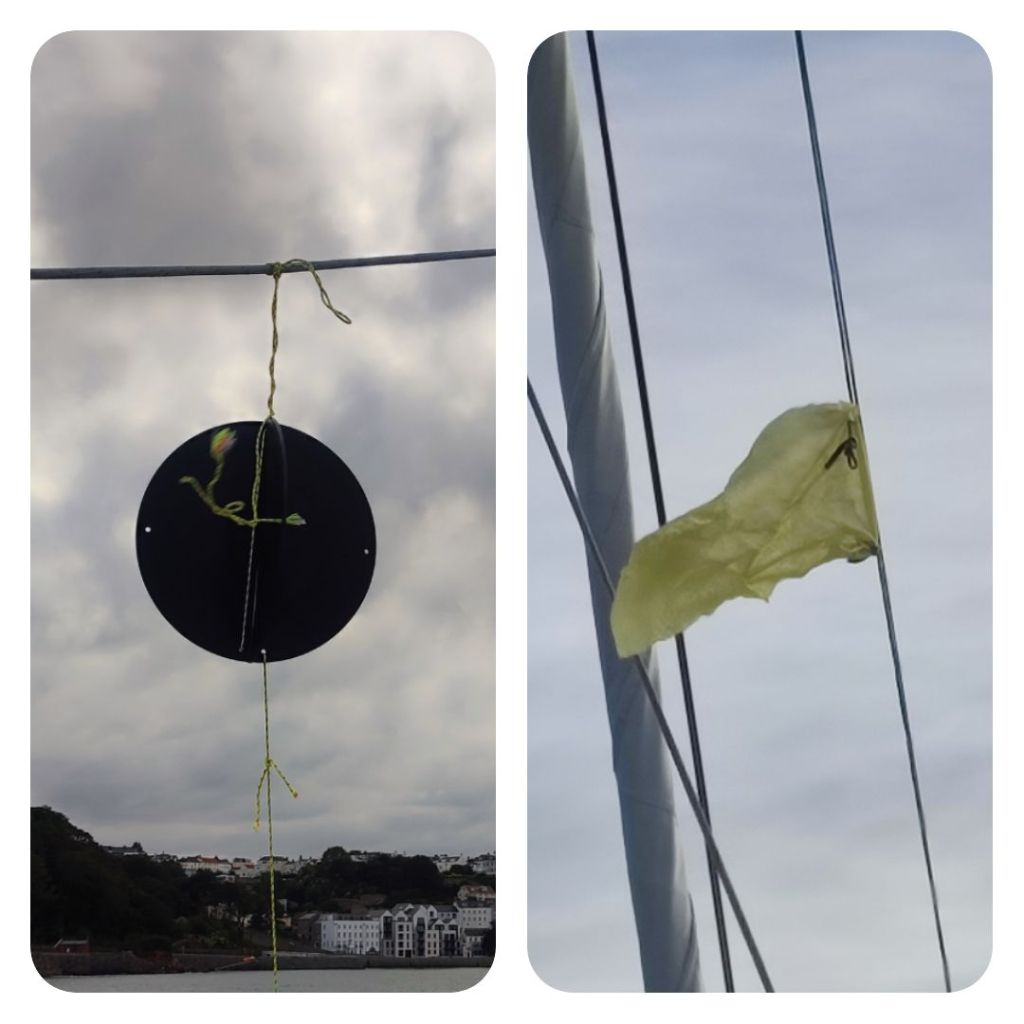
18:00 Dropped anchor in Havelet Bay which lies south of St Peter Port and Castle Cornet.We prepared for a tidal fall of 5 metres (15 feet) by laying out 35m of anchor chain. Then raised the anchor ball, and our yellow Q Flag to alert Customs officials of our unregistered arrival.
We fixed a transit line on the harbour wall to check for anchor drift. Going nowhere!

We were exhausted after our first day. The transition was complete and we settled down for a simple meal as the yacht rocked into the night. We watched a sailing race pass by and a flock of noisy oyster catchers flew overhead like a Red Arrows display.
Wonderful.


Zzzzzzzzzzzz
Previous Post <<< >>> Next Post
 Experience Sailing